

Africans With Blue Eyes: The Rare Genetic Mystery Explained
The majority of Africans have beautiful brown eyes, ranging from deep chocolate to warm amber. These shades create rich, captivating patterns that vary uniquely from person to person.
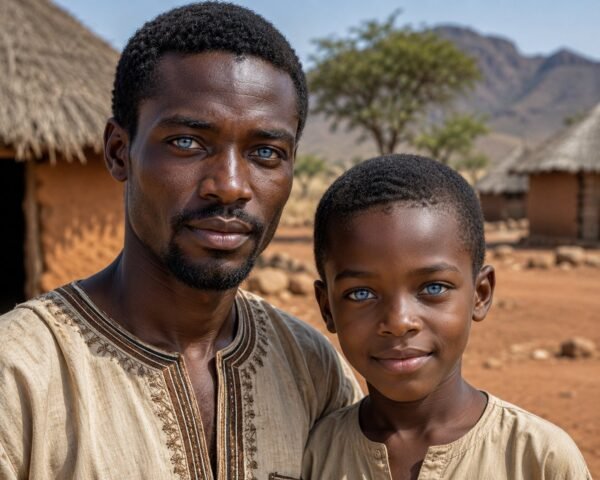
Table of Contents
Africans With Blue Eyes – Can Africans Naturally Have Blue Eyes?
This showcases nature’s artistry and beauty at its finest. Many Africans also have dark, caramel-colored eyes. This creates a stunning contrast between their dark irises and bright whites. This eye color variation demonstrates the remarkable diversity in the African genetic heritage.
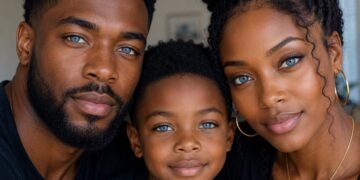
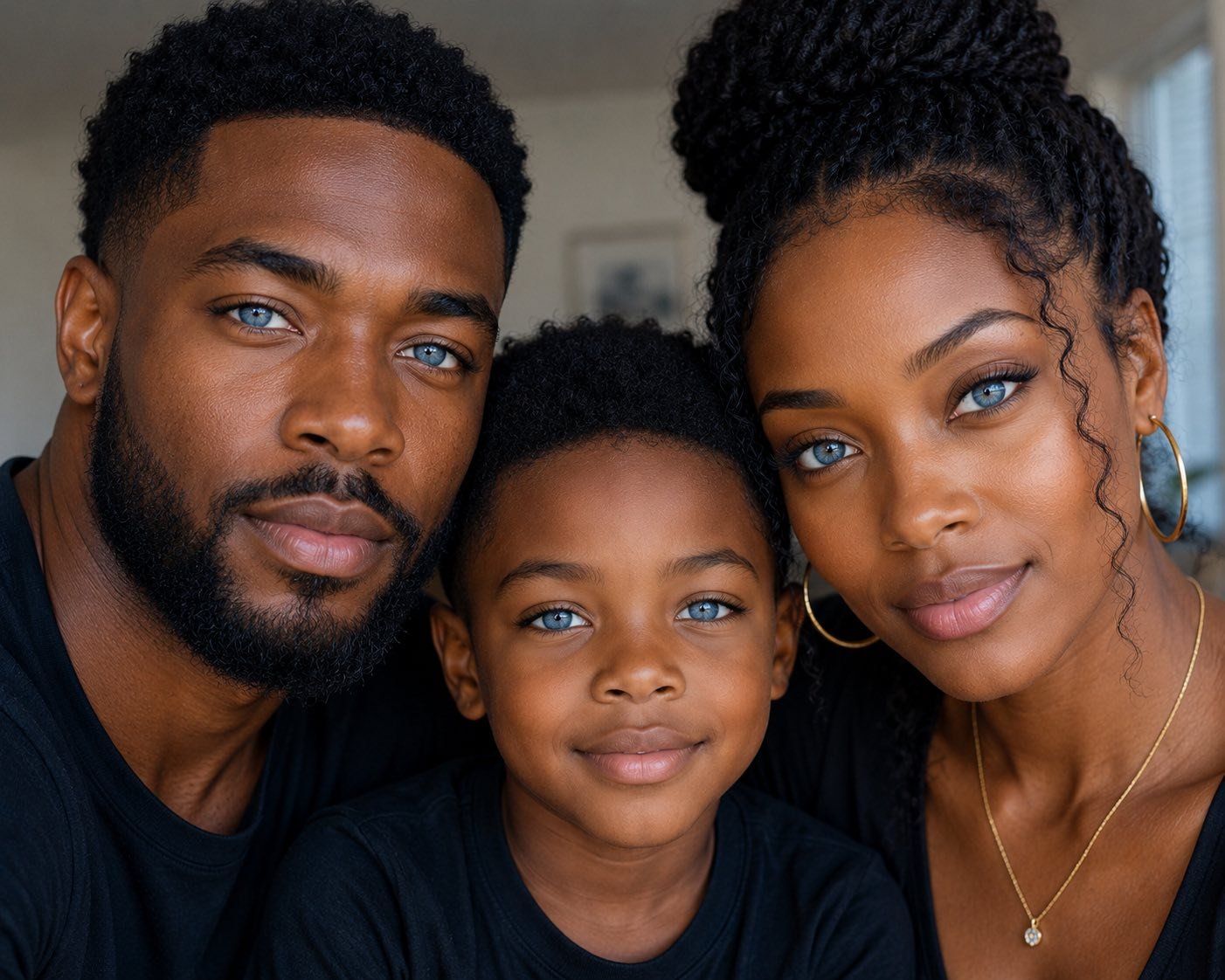
The rarest eye color among Africans is blue. Blue eyes occur in only 6-8% of the global population, especially among individuals with darker skin tones. This creates a particularly striking and beautiful appearance.
Read Also: Discover Unique Igala Artefacts and Cultural Heritage
In Nigeria, specifically in Kwara State, a woman named Risikat Azeez and her daughter went viral for their blue eyes. It was a heartbreaking story that highlights misconceptions about genetic diversity.
The woman faced rejection and accusations of witchcraft from her own family, simply because they possessed striking blue eyes. This tragic incident reveals how little many people understand about the natural genetic ratio that exists within African communities.
Africans With Blue Eyes: Why Do Some Africans Have Blue Eye
These distinct traits are a result of a little gene mutation known as OCA2. Melanin is the unique chemical that gives skin, hair, and eyes their color. In this case, melanin undergoes mutation, according to Professor Hans Eiberg, a cellular and molecular medicine expert.
Everyone used to have brown eyes. As humans evolved, the OCA2 gene underwent a strange genetic mutation. This caused the chromosome to be turned off, reducing melanin production in the iris.
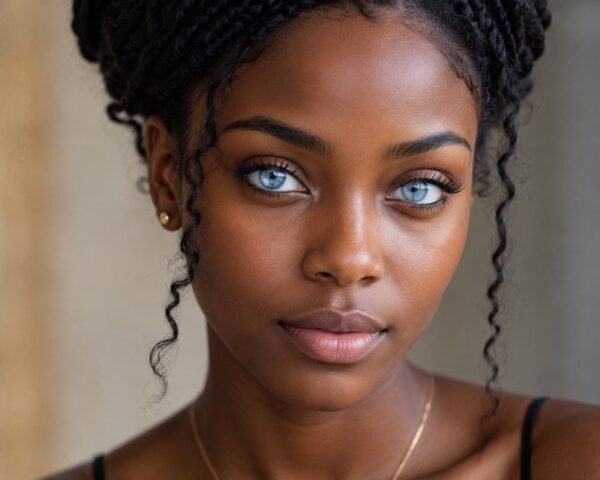
Melanin is the same pigment that gives skin and hair their color. The higher the melanin concentration, the darker the skin color. Eye color is determined by the amounts and distribution of melanin in the iris.
Read Also: What the Owo Mask Reveals About Yoruba History
A high melanin level gives brown eyes, which is a dominant trait. A lower melanin level results in blue or green colored eyes, which are recessive traits. However, multiple genes control this melanin production and distribution in the iris.
Africans With Blue Eyes: What Causes Blue Eyes in Black Africans?
Blue eyes have appeared in small, isolated communities in Africa. Some Ethiopian, Nigerian, Kenyan, and Namibian communities have children born with light blue eyes and greenish eyes.
The Ari tribe is one of the largest indigenous ethnic groups in Ethiopia. They live in the lush Omo Valley. They are renowned for their agricultural activities, including the cultivation of various crops, the production of honey, and coffee cultivation.
They are also into pottery making and blacksmithing. They speak the South Omotic Ari language. Eye color is determined by many variations in a person’s genes. The blue eye in this tribe is due to a localized genetic mutation that runs in their family line.
Africans With Blue Eyes: Black People With Blue Eye
The Randille tribe in northern Kenya is an indigenous group known for its striking blue eyes. They are traditionally semi-nomadic pastoralists. The Randille are renowned for herding camels, which they rely on for milk, blood, and transport.
Read Also: Discover the Beauty of Bwari Rock in Abuja, Nigeria
They see this trait as sacred and tied to their ancestors’ spirit. It stands as a special tie to their gods and a testament to enduring connections to the spiritual world. The number of blue-eyed individuals in the Randille tribe could be attributed to genetic variation from intertrade migration.
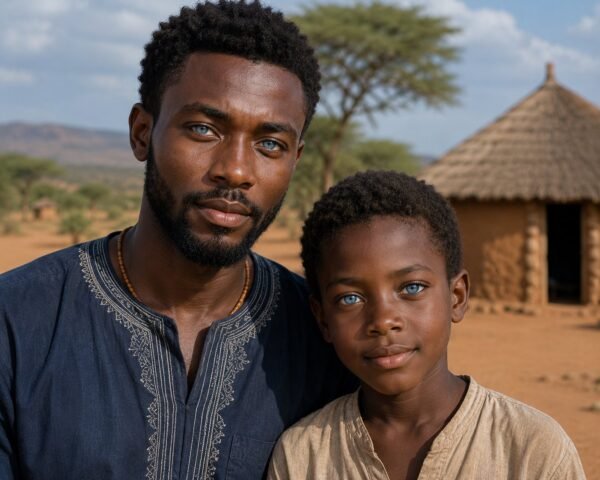
This blue eye is a distinguishing characteristic. The most famous figure is Abushe, a young boy from Jinka, Ethiopia, gained global attention for his luminous
blue eyes. He is frequently photographed by tourists.
The presence of blue eyes among Black Africans provides a powerful example of human genetic diversity and shared ancestry. Instead of regarding this trait as unusual or suspicious, it should be celebrated as part of the magnificent spectrum of human variation.
Source: Dkmngr.com